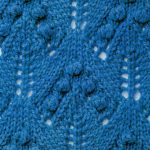
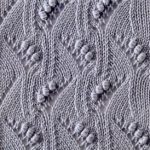
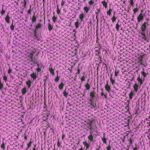
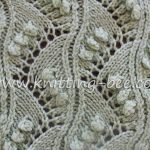
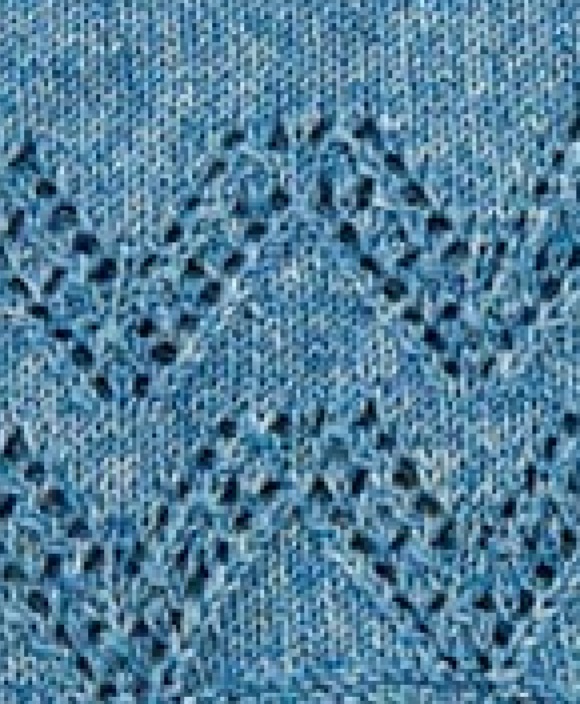
This flower bobble knitting stitch pattern creates a pretty textured floral panel using lace eyelets, decreases and raised knitted bobbles. The 15-stitch motif combines an openwork leaf or flower shape with a cluster of bobbles, making it an attractive decorative stitch for scarves, cushion covers, blankets, bags and other knitting projects.
The pattern is worked over 15 stitches and 18 rows. Yarn overs and paired decreases create the lace section, while four small bobbles form the raised flower detail. Repeat Rows 1–18 to create a continuous vertical knitted flower panel.
This stitch is best suited to knitters who are comfortable with basic lace knitting, yarn overs and simple decreases. The bobble itself is straightforward and is completed within a single row.
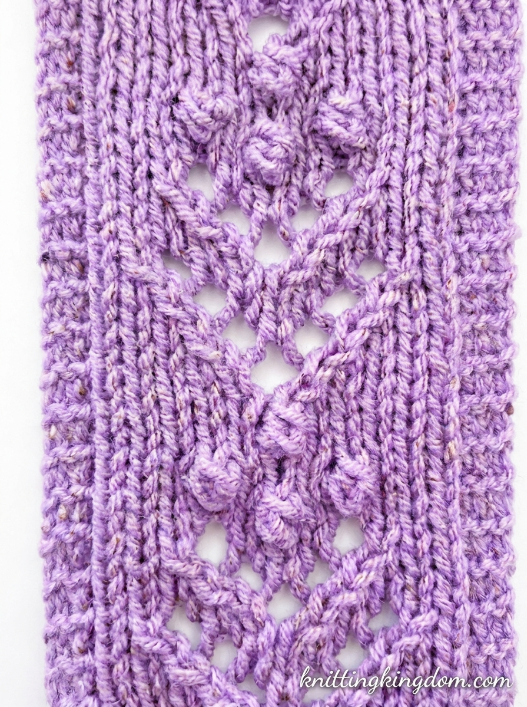
Flower Panel Knitting Pattern
Pattern repeat: 15 stitches and 18 rows
Abbreviations
k – knit
p – purl
st(s) – stitch(es)
RS – right side
WS – wrong side
yo – yarn over
k2tog – knit 2 stitches together
skp – slip 1 stitch knitwise, knit the next stitch, then pass the slipped stitch over the stitch just knitted
MB – make bobble
How to Make the Bobble (MB)
MB: (k1, p1, k1, p1, k1) all into the next stitch, then pass the 2nd, 3rd, 4th and 5th stitches over the first stitch.
The bobble begins and ends as one stitch. You temporarily create five stitches from one, then pass four of those stitches over the remaining stitch to form the raised bobble.
Written Flower Stitch Pattern
Cast on 15 stitches for one flower panel.
Row 1 (RS): p2, k4, k2tog, yo, k5, p2.
Row 2 and all following WS rows through Row 16: k2, p11, k2.
Row 3: p2, k3, k2tog, yo, k1, yo, skp, k3, p2.
Row 5: p2, k2, k2tog, yo, k3, yo, skp, k2, p2.
Row 7: p2, (k1, k2tog, yo) twice, k2, yo, skp, k1, p2.
Row 9: p2, k3, k2tog, yo, k1, yo, skp, k3, p2.
Row 11: p2, k2, k2tog, yo, k3, yo, skp, k2, p2.
Row 13: p2, k5, MB, k5, p2.
Row 15: p2, (k3, MB) twice, k3, p2.
Row 17: p2, k5, MB, k5, p2.
Row 18: k2, p11, k2.
Repeat Rows 1–18 for the flower panel pattern.
Helpful Knitting Notes
The panel maintains 15 stitches throughout the entire repeat. On the lace rows, each yarn over is balanced by a decrease, so your stitch count should return to 15 at the end of every row.
The two purl stitches at either side of the motif help define the flower panel against a knitted background. If you are incorporating the motif into a larger project, place stitch markers on either side of these 15 stitches to make the repeat easier to follow.
Pay particular attention to Row 7. It contains several yarn overs and decreases, but the stitch count still balances correctly. If your count is wrong at the end of this row, check that you worked both repeats inside the parentheses and did not miss the additional yo before the skp.
The bobbles are worked differently from bobbles that require turning the work several times. For this stitch, five stitches are made into a single stitch and four are then passed over the remaining stitch. This creates a compact raised bobble without working extra rows.
For good stitch definition, avoid pulling the five stitches of the bobble too tightly. Giving them a little room makes it easier to pass the four stitches over and helps the finished bobble sit prominently on the right side of the work.
Knitting the Pattern in a Larger Project
If you want to use this knitted flower stitch as a decorative feature rather than knitting it by itself, treat the entire 15-stitch section as one panel. Add your chosen background stitches on either side and keep the flower motif centred.
Because the pattern combines lace knitting, bobble stitches and a floral motif, a smooth yarn with good stitch definition will show the eyelets and raised flower details particularly well.